
January 23, 2026

Companion Care vs. Personal Care: What’s the Right Choice for Your Loved One?
To take care of your relatives, it is enough to ensure they receive good care. To do this, you need to understand the differences between various terms. Learn the key differences between companion care vs. personal care to make the right decision.
Understanding Companion Care and Personal Care
Many people confuse the concepts of “home care” and “personal assistance,” even though they refer to different types of support. When choosing the right service, it is important to understand how they differ, as your relative’s needs may require one type of assistance more than another.
What Services Are Included in Companion Care?
A companion is a person who provides support in everyday life and helps elderly or needy people to remain active and not feel lonely. Their role is more related to presence, communication, and everyday support. The duties of such an assistant may include:
- accompanying them to meetings, walks, or doctors’ appointments;
- helping with shopping and light meal preparation;
- participating in board games, conversations, and keeping them active;
- performing simple household chores, such as laundry or cleaning;
- organizing and providing transportation for errands.
Unlike personal care specialists, companions do not undergo in-depth training and do not perform tasks related to physical assistance or medical procedures
What Services Are Included in Personal Care?
Personal care is intended for people who need immediate assistance in performing daily activities. This type of home care involves closer caregiver involvement and aims to maintain the client’s health, cleanliness, and independence, as well as ensuring their safety and mobility at home.
The following may be provided as part of personal care assistant duties:
- assistance with basic activities – from morning self-care to dressing and using the toilet;
- assistance with moving around the home, including safe transfers and transfers to a chair or bed;
- reminders to take prescribed medications on time;
- monitoring of the person’s general condition, including changes in appetite, activity, or mobility.
This type of care is especially important for people with limited mobility, chronic illnesses, and seniors.
Key Differences Between Companion Care and Personal Care
When the differences between domestic support and self-care assistance become clear, it is much easier to determine which format will be most useful for your relative. Both areas are important in the long-term care system and complement each other.
Level of physical assistance required
Companion care services involve minimal physical involvement. A caregiver primarily provides companionship. In personal care, the situation is different: here, the assistant actively participates in a person’s daily activities.
Types of caregivers and their training
Companion and personal care differ in terms of skill level and responsibility. We have prepared a comparison in the table below.
| Type of Care | Requirements and Skills | Training Features |
| Companion care | Usually, attentiveness, communication skills, and responsibility are sufficient. Formal documents are often not required. | Some services may conduct short introductory training sessions to ensure that employees understand work standards and the basics of interacting with clients. |
| Personal care | More serious knowledge is required: how to safely help a person move around, use assistive devices, and maintain hygiene. | Professional training is often required. Specialists may have HHA or CNA qualifications, confirming their training in practical work with people who need physical support. |
Suitable care settings for each service
The appropriate conditions for providing different types of care depend on the level of support a person needs and how actively the caregiver should be involved.
Companion care works best in situations where a person remains fairly independent and primarily needs communication, companionship, and light household assistance. This format is ideal for a home environment, where it is important to maintain a familiar rhythm of life, reduce feelings of loneliness, and provide minimal support without physical intervention.
Personal care, on the other hand, requires a more structured environment. It includes assistance with hygiene, mobility, and other activities that require physical involvement.
How to Decide Which Type of Care Is Needed
When choosing the type of support, consider the following points:
- Daily tasks. Do they need help with hygiene, dressing, and other activities, or is their main need communication, companionship, and emotional support?
- Health status. Level of mobility, cognitive changes, chronic diseases, and other factors that affect a person’s ability to cope with everyday life.
- Lifestyle. Does your relative strive to remain active and maintain social contacts, or do they find it difficult to perform basic activities without assistance?
- Financial capabilities. The cost of different types of care can vary, so it is important to clarify in advance which services are covered by insurance or government programs.
A comprehensive view of these criteria will help you choose the type of care that will provide comfort, safety, and the right level of support.
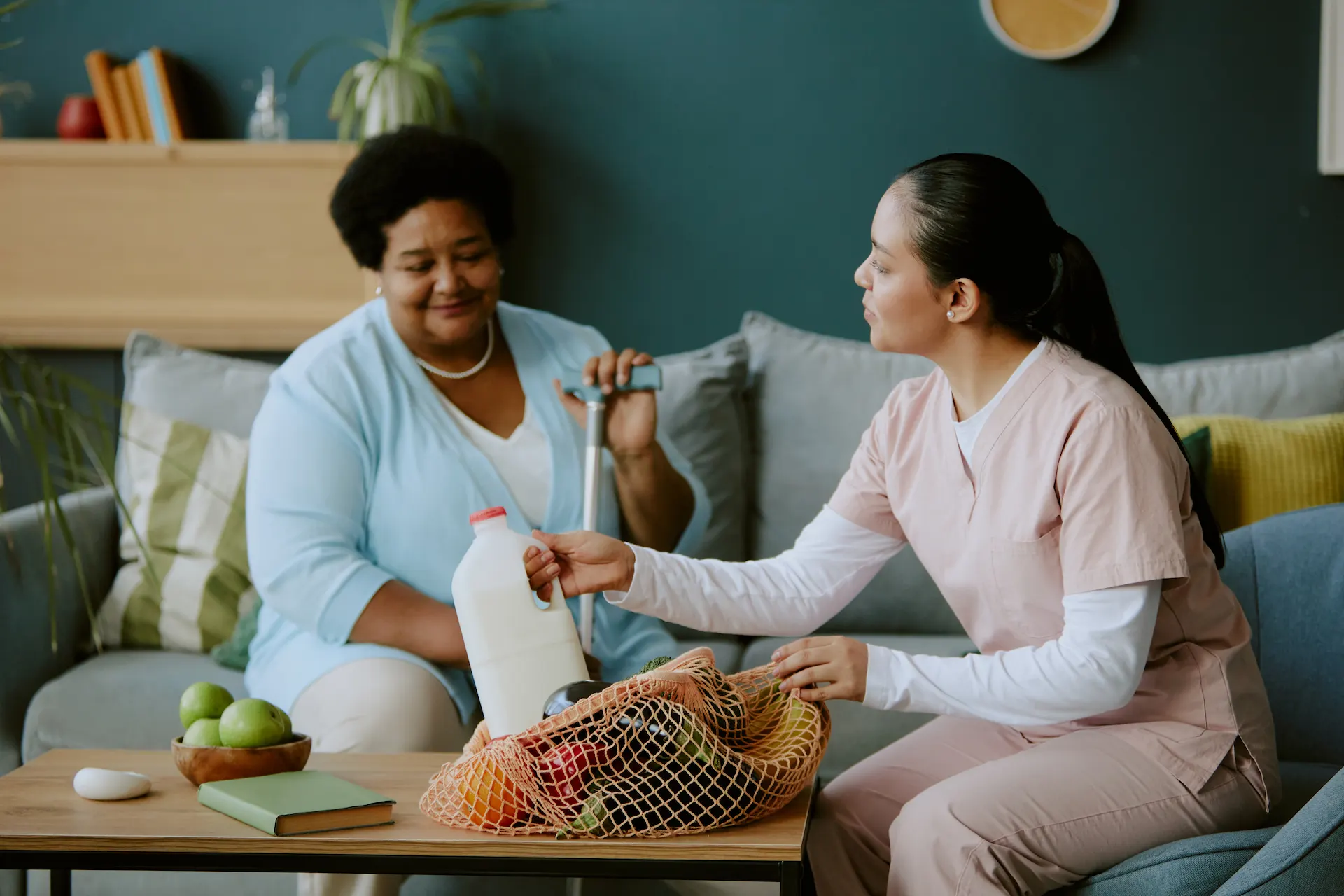
Benefits of Home-Based Companion and Personal Care
Personal and companion duties can be performed at home. A caregiver can come and perform all tasks, adapting to your needs. This option has many advantages.
Familiar surroundings and emotional comfort
Families feel much more confident when they know that a trained specialist is working alongside their loved ones. This reduces tension and relieves constant anxiety. And for older people, this kind of support becomes an important resource: regular communication, help with daily tasks, and care for everyday needs make their lives more comfortable, stable, and fulfilling.
Flexible scheduling and personalized attention
Both types of assistance can be flexibly adapted to the situation, from occasional visits several times a week to the constant presence of an assistant. Unlike large institutions, where attention is divided among many people, the home format allows you to focus on one person and their real needs. In addition, a personal care specialist can work with the attending physician to develop a support plan that considers the client’s health, mobility, and individual wishes.
Improved mental and physical well-being
The constant presence of an assistant provides communication, support, and a sense of companionship. Many caregivers help with small tasks, take their charges on short walks, and encourage light activity. This allows families to organize visits and meetings with greater peace of mind, and enables older people to remain involved in life and feel a sense of wellness.