
October 2, 2026

Cold Weather Health Risks for Seniors: What Families and Caregivers Should Watch For
When temperatures drop across Philadelphia and the surrounding counties, cold weather brings real risks for older adults, from hypothermia to falls on icy walkways. Seniors often feel cold differently and may not notice the warning signs until they’re serious, which makes a watchful family member or caregiver so important. A little preparation goes a long way, and personal home care services can add an extra layer of safety through the winter months.
Key Takeaways
- Older adults lose body heat faster and may not feel cold as strongly as younger people.
- Hypothermia can set in indoors, not just outside, and early signs are easy to miss.
- Cold weather adds strain on the heart and can worsen joint pain and circulation issues.
- A warm home, layered clothing, and safe heating are simple ways to reduce risk.
- Confusion, intense shivering, or numbness that won’t warm up are signs to call a doctor.
Why Older Adults Feel Cold Differently
As the body ages, it becomes less efficient at regulating temperature and holding onto heat. Thinner skin, slower circulation, and a reduced ability to sense temperature changes all mean seniors can get dangerously cold without realizing it. This is a big part of why do elderly feel cold all the time, and why a senior may insist they’re fine even as their body struggles to stay warm.
Hypothermia: Early Signs That Are Easy to Miss
Hypothermia happens when body temperature drops too low, and it can develop indoors in a home that isn’t warm enough. Early signs are often subtle: shivering, cold or pale skin, tiredness, slower movements, and mild confusion. As it worsens, shivering may stop, speech may slur, and the person may become very drowsy. If you notice these signs, warm the person gradually with blankets and warm (non-caffeinated) drinks, and seek medical help right away if confusion or extreme drowsiness sets in.
Frostbite and Poor Circulation
Frostbite affects exposed areas like fingers, toes, ears, and the nose, and seniors with poor circulation are especially vulnerable. Watch for numbness, tingling, or skin that looks white, gray, or waxy. If you suspect frostbite, move indoors, warm the area gently with body heat or warm (not hot) water, and avoid rubbing the skin. Skin that stays numb or discolored after warming needs prompt medical attention.
How Cold Affects the Heart and Blood Pressure
Cold temperatures cause blood vessels to narrow, which can raise blood pressure and make the heart work harder. For seniors with existing heart conditions, this added strain is worth taking seriously, especially during strenuous activity like shoveling snow. It’s one reason older adults should pace themselves in the cold and check with their doctor about safe activity levels in winter.
Cold Weather and Joint Pain
Many seniors notice their joints feel stiffer and more painful when it’s cold. While the exact reasons aren’t fully understood, keeping warm, staying gently active, and dressing in layers can help ease winter stiffness. A caregiver can support light indoor movement and comfortable routines that keep joints from getting too stiff during long cold stretches.
Medications That Increase Cold Sensitivity
Some common medications can affect how the body handles cold, including certain blood pressure medications like beta-blockers, along with sedatives and some other prescriptions. If your loved one seems unusually sensitive to cold or you’re unsure how their medications may affect them, it’s worth asking their doctor or pharmacist. Never adjust or stop a medication on your own.
Safe Indoor Temperature for Seniors
Keeping the home warm enough is one of the most important ways to protect a senior in winter. A steady indoor temperature of at least 68°F to 70°F is generally recommended for older adults, since cooler homes can quietly lead to hypothermia over time. Check that heating works before the coldest months arrive, keep frequently used rooms warm, and make sure your loved one has easy access to the thermostat.
Dressing in Layers the Right Way
Layering is one of the best ways to keep elderly loved ones warm in winter, since it traps warm air close to the body. Start with a comfortable base layer, add an insulating middle layer like fleece or wool, and finish with a warm outer layer for going outside. Hats, warm socks, and gloves matter too, since a lot of body heat escapes through the head and extremities. Warm, non-slip footwear also helps prevent falls on slick surfaces.
Staying Active When It’s Too Cold to Go Out
Staying active supports circulation, mood, and warmth, but harsh weather often makes going outside unsafe. Simple indoor activities like gentle stretching, walking around the house, chair exercises, and light housekeeping keep the body moving without braving the cold. A caregiver can encourage safe, enjoyable movement and keep the day engaging even when everyone’s stuck inside.
Heating Safety: Space Heaters and Electric Blankets
Space heaters and electric blankets help keep seniors warm, but they need to be used carefully. Keep space heaters at least three feet from bedding, curtains, and furniture, place them on a flat surface, and turn them off before sleeping or leaving the room. Check that heating devices aren’t damaged or overly worn, and make sure smoke and carbon monoxide detectors are working throughout the home.
When to Call a Doctor
Some cold-related symptoms call for prompt medical attention. Reach out to a doctor, or call 911 in an emergency, if your loved one shows signs of hypothermia like intense shivering, confusion, or extreme drowsiness, or has numbness and skin discoloration that doesn’t improve with warming. When in doubt, it’s always safer to check with a healthcare professional than to wait.
How a Caregiver Helps During Cold Months
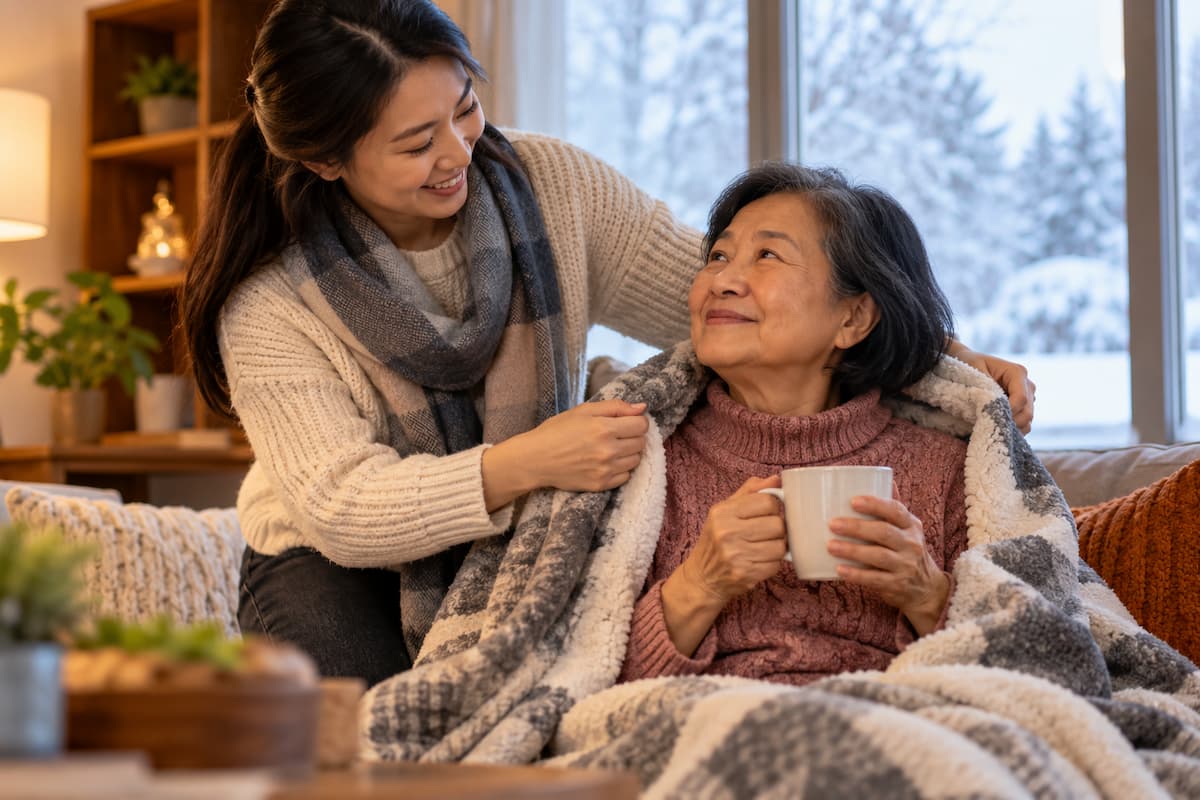
A caregiver can be a steady, watchful presence through the winter, checking that the home stays warm, helping your loved one dress appropriately, and preparing warm meals and drinks. Beyond the practical help, companion care services offer conversation and connection during the long stretches indoors when seniors are most likely to feel isolated. For families who can’t be there every day, a trusted caregiver offers real peace of mind that someone is keeping an eye on their loved one’s comfort and safety.
AI Summary
Cold weather health risks for seniors include hypothermia, frostbite, added strain on the heart, and worsened joint pain, made more dangerous because older adults often don’t feel the cold as strongly. Families can reduce risk by keeping the home at a steady 68–70°F, dressing loved ones in layers, using heating devices safely, and watching for warning signs like intense shivering, confusion, or numbness that won’t warm up. In Philadelphia and the surrounding counties, Stay At Home Homecare’s caregivers help seniors stay warm, safe, and connected through the winter. Call (215) 355-9999 to schedule a free consultation.