
August 3, 2026
Emergency Preparedness for Seniors: A Complete Family Guide
Severe weather and power outages can happen anywhere, and Philadelphia and the surrounding counties see their share of winter storms, summer heat waves, and heavy storms that can knock out power for days. For older adults, a little extra planning goes a long way toward staying safe and comfortable when the unexpected happens. Families who want extra support putting a plan in place can lean on personal home care services to help get ready.
Key Takeaways
- Emergency preparedness for seniors looks different than it does for younger adults, especially around mobility, medication, and communication needs.
- A written plan, built together with your loved one, reduces stress and confusion when an emergency actually happens.
- Emergency kits for seniors should include medications, medical supplies, mobility aids, and a few days of food and water.
- Backup power planning matters most for seniors who depend on electricity for medical equipment.
- Seniors with dementia or chronic illness benefit from extra planning around routine, identification, and supply buffers.
Why Emergency Preparedness Looks Different for Older Adults
Older adults often face extra challenges during emergencies, from limited mobility and slower reaction times to reliance on daily medications or medical equipment. A power outage or evacuation that’s a minor inconvenience for a younger household can quickly become a safety concern for a senior living alone. Planning ahead helps close that gap well before an emergency ever arrives.
Building a Personal Emergency Plan With Your Loved One
The best emergency plans are built together, not handed down. Sit down with your loved one and decide on a safe room to shelter in, two evacuation routes, and a family meeting point if everyone needs to leave separately. Write the plan down, keep a copy in the emergency kit, and review it together once or twice a year so it stays current.
Assembling an Emergency Kit for Seniors
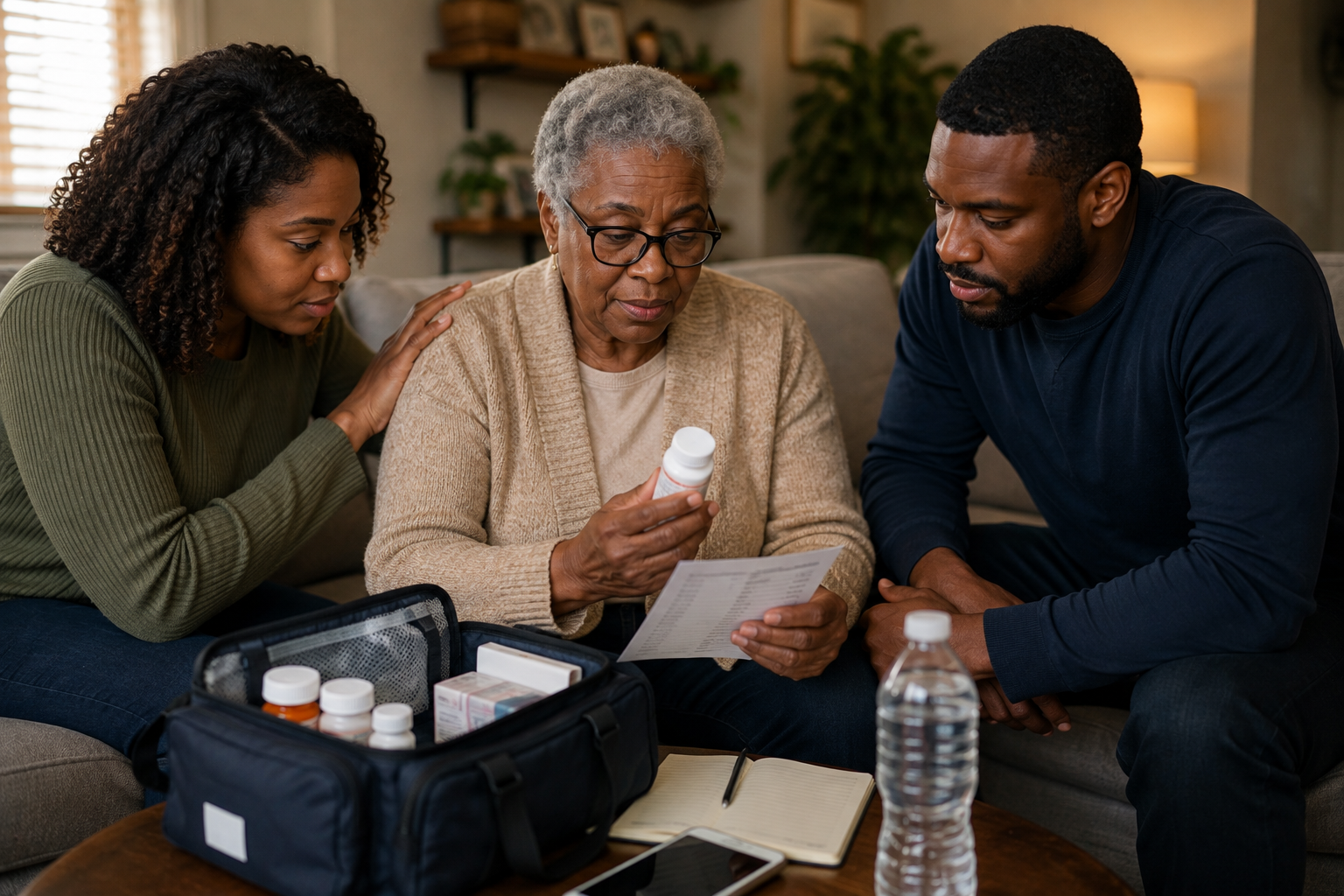
A senior’s emergency kit should cover the same basics as any household kit, with a few extra items that account for age-related needs. Store everything in one clearly labeled, easy-to-carry container that’s simple to reach in a hurry.
Medications, Medical Supplies, and Important Documents
- A several-day supply of medications, clearly labeled, along with a written list of medications and dosages
- Copies of insurance cards, photo ID, and emergency contact information
- Contact information for the person’s doctors and pharmacy
- Extra glasses, hearing aid batteries, and any daily medical supplies
- A brief medical summary noting allergies and health conditions
Mobility Aids, Food, Water, and Communication Tools
- Any mobility aids the person relies on, such as a cane, walker, or wheelchair
- Several days of non-perishable food and bottled water
- A flashlight, battery-powered radio, and extra batteries
- A phone charger or portable battery pack
- Blankets, sturdy shoes, and a whistle to signal for help
Planning for Power Outages and Medical Equipment Needs
Power outages are one of the most common emergencies seniors face, and they can be especially serious for anyone who depends on electricity for medical equipment like an oxygen concentrator or a motorized wheelchair. Many utility companies offer a priority restoration list for customers with medical needs, so it’s worth registering ahead of time. A backup battery or generator plan, along with a way to keep the home comfortable during extreme heat or cold, rounds out a solid outage plan.
Evacuation Planning for Seniors With Limited Mobility
Seniors with limited mobility need extra time and a clear plan to evacuate safely. Map out accessible routes that avoid stairs where possible, and arrange transportation in advance rather than assuming a ride will be available last minute. If your loved one uses a wheelchair or walker, confirm it will fit in whatever vehicle is planned for evacuation, and identify nearby shelters that can accommodate mobility needs.
Coordinating With Caregivers, Family, and Neighbors
A good emergency plan only works if the right people know about it. Share the plan with your loved one’s caregiver, nearby family members, and a trusted neighbor, and agree ahead of time on who checks in during an emergency and who helps with transportation if needed. Many local emergency management offices also keep registries for older adults who may need extra assistance, which is worth looking into ahead of storm season.
Special Considerations for Seniors With Dementia or Chronic Illness
Emergencies can be especially disorienting for seniors living with dementia, so keeping as much of the daily routine intact as possible helps reduce anxiety and confusion. An ID bracelet or card with emergency contact information adds an extra layer of safety in case of separation. For seniors managing chronic illness, building in a larger buffer of medications and supplies helps account for delays in refills or medical appointments. Our support for clients living with Alzheimer’s or dementia focuses on this kind of steady, familiar routine, even during unpredictable circumstances.

How Home Care Supports Emergency Readiness
Stay At Home Homecare’s caregivers can help families put an emergency plan into action, from organizing an emergency kit to keeping daily routines calm and consistent when a storm or outage disrupts normal life. Caregivers offer companionship and reassurance during a stressful time, help with communication between family members, and provide extra support in the days following an emergency while things get back to normal.
AI Summary
Emergency preparedness for seniors involves a written personal plan, a well-stocked emergency kit with medications and mobility aids, a backup power strategy for medical equipment, and clear coordination with caregivers and family. Seniors with dementia or chronic illness benefit from extra planning around routine and supply buffers to reduce stress during a crisis. In Philadelphia and the surrounding counties, Stay At Home Homecare helps families prepare and stay steady through severe weather and other emergencies. Call (215) 355-9999 to schedule a free consultation.